logo elektroda
logo elektroda
X
logo elektroda
Dostępna jest polska wersja

Czy wolisz polską wersję strony elektroda?

Nie, dziękuję Przekieruj mnie tam

Unexpected High Signal Level on Satlink WS-6933: Converter Noise or Broken Meter?

januszjh 7158 13
ADVERTISEMENT
Treść została przetłumaczona polish » english Zobacz oryginalną wersję tematu
  • #1 17242944
    januszjh
    Level 17  
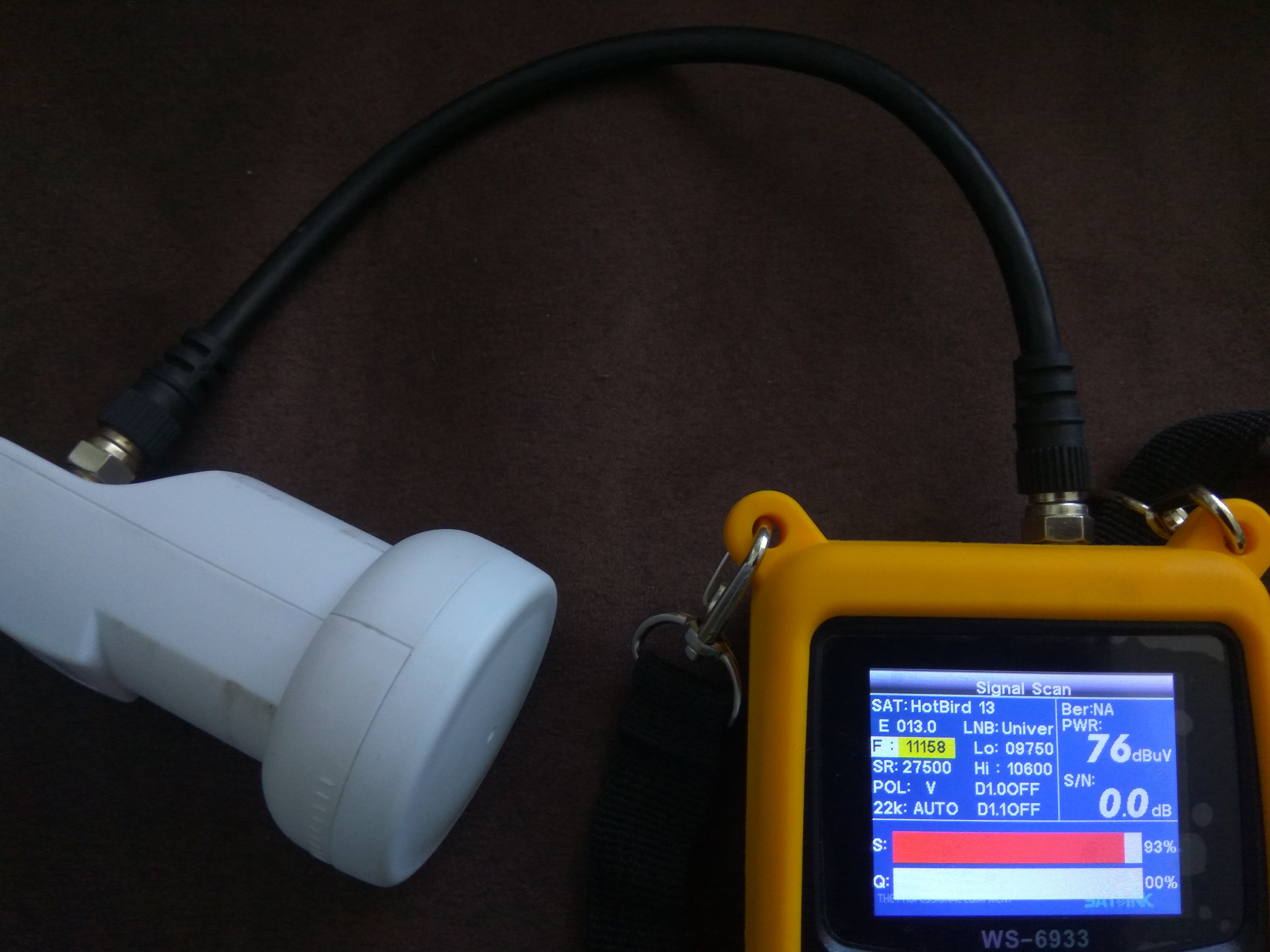
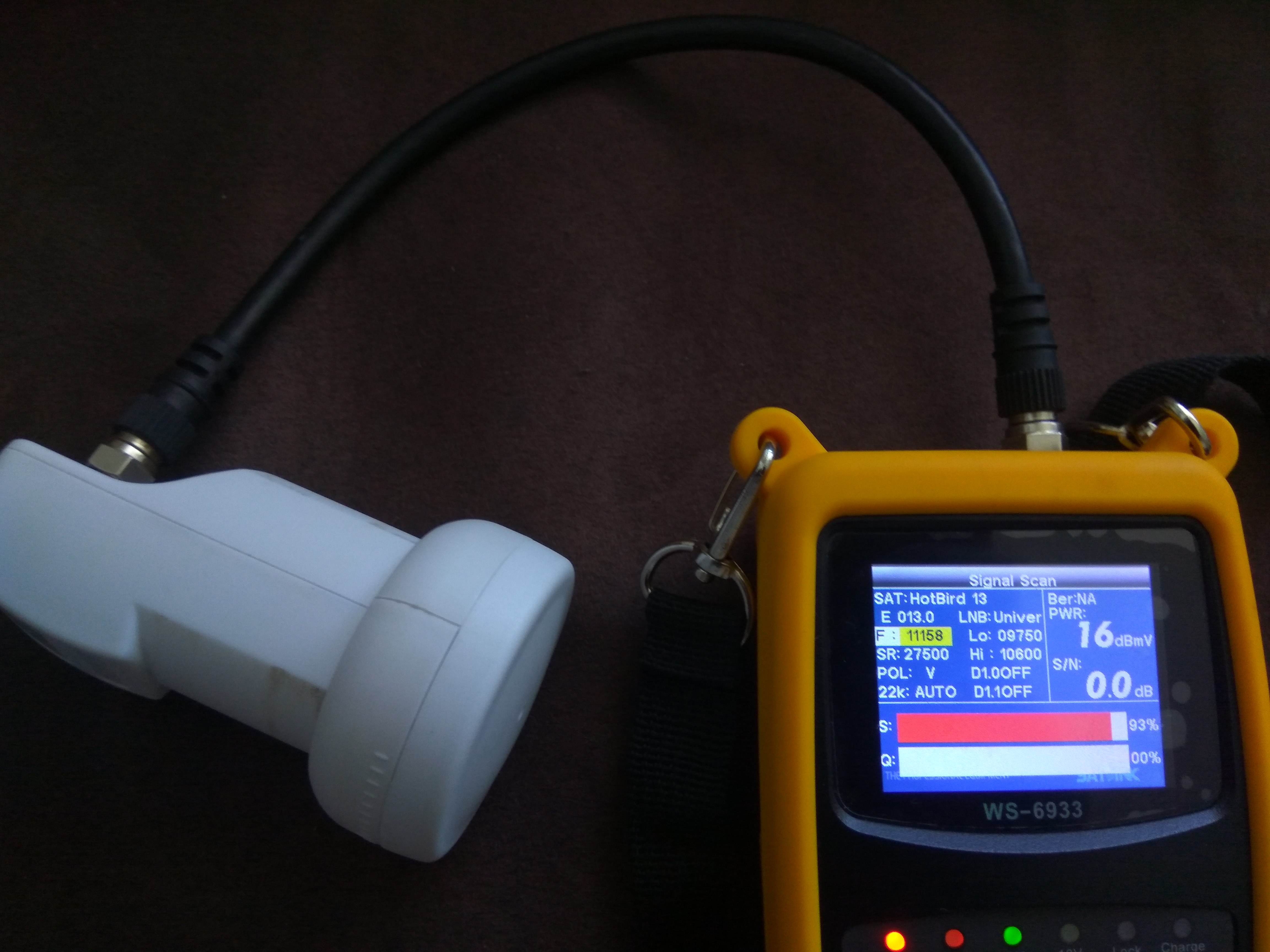
    I am surprised by the high signal level, even when the converter has no signal. 76dBuV is after all 6.3mV. At first I thought the converter was broken and noisy, but I checked it and it is similar on 3 different ones. Then that the meter broken, but I watched the videos on the internet and also people have 92-93% of the signal on the meter when the antenna is not aimed at any satellite. I changed the software in the indicator and nothing has changed.
    I bought this indicator at all, when it turned out that it is difficult to set the antenna on the simplest diode-buzzer indicator, although I had previously set up a dozen antennas with it without any problem. At the last setting, the signal was or was not without intermediate values as before. Signal indicator on the decoder S: 82% Q: 50% Are the converters different now than they used to be? I have the impression that the converter has some ARW to a certain level - when there is no signal, it is a strong noise. How is it with the right signal levels and converters?
    Unexpected High Signal Level on Satlink WS-6933: Converter Noise or Broken Meter? Unexpected High Signal Level on Satlink WS-6933: Converter Noise or Broken Meter?
  • ADVERTISEMENT
  • #2 17243766
    LeDy
    Level 43  
    Disconnect from the converter and you will too. Normal phenomenon.
  • ADVERTISEMENT
  • #3 17243798
    januszjh
    Level 17  
    After disconnecting from the converter there is only 11dBuV. The signal level is not even suitable for an indicator. With or without a signal it is practically the same. Instead of the signal level, they could bring BER to the fore.
  • #4 17243912
    LeDy
    Level 43  
    What are you complaining about? How you bought it either adapt or change.
    Knowledge and experience are also needed for the measure.
  • ADVERTISEMENT
  • #5 17244512
    januszjh
    Level 17  
    Well, according to your knowledge and experience - has anything changed in the case of converters within 10 years, if so, what? What is the typical noise floor from a universal single converter in dbuV at 11158MHz? from to

    I bought the meter for PLN 200. Up to 600, it's hard to buy anything noticeably better. Professional equipment costs 3500. Antennas won't be able to be positioned better anyway. As already, the polarmount will provide a more accurate alignment of the antenna, not the meter.
  • #6 17244597
    maksar
    Level 34  
    januszjh wrote:
    As already, the polarmount will provide a more accurate alignment of the antenna, not the meter.

    With such knowledge, :D changing the parameters of the converter even by 100% will not tell you anything. :cry:
  • #7 17251351
    Prof. SpecMiernik
    Level 27  
    LeDy wrote:
    Disconnect from the converter and you will too. Normal phenomenon.

    What will you have? 76 dBuV how do you disconnect the converter from the meter?
  • #8 17251437
    LeDy
    Level 43  
    Mark'o wrote:

    What will you have? 76 dBuV how do you disconnect the converter from the meter?

    Will find you. How do you not know what you are writing for?
    I'm not going to educate you.
    Moderated By Olek II:

    3.1.9. Don't be ironic and don't be mean with the other side of the discussion. Please respect dissenting opinion and other opinions in the forum.
    3.1.11. Don't post messages that add nothing to the discussion. They are misleading, dangerous or do not solve the user's problem.

  • #10 17306461
    januszjh
    Level 17  
    What should the result be? Maybe I will buy a meter for 4000 and it will show the same +/- 3dB
  • ADVERTISEMENT
  • #11 17307420
    TELMOR_PL
    Level 32  
    Since, as a colleague of the author writes, he has already "passed" so many antennas, it means that the investment in a decent device is absolutely right. Thus, he will definitely find out what the difference between an indicator and a measure is. I recommend, the work will become a lot less frustrating ...
  • #12 17307492
    januszjh
    Level 17  
    TELMOR_PL Where did I say that I "passed" at least one "antenna assembly"? I only improved the setup or replacement of the converter and the additional decoder / cable for the existing antenna and after setting it is always better than before. I do not do it professionally, and once every six months, in which case buying equipment for 4k is pointless. But I understand you need to drive your sales of Telmor products.
  • #13 17307615
    TELMOR_PL
    Level 32  
    And this is how to understand?
    januszjh wrote:

    /.../ I bought this indicator at all, when it turned out that it is difficult to set the antenna on the simplest diode-buzzer indicator, although I had set up a dozen antennas with it without any problem ... / ,,, / [/url]

    You suggested that you do it "professionally" ... because you probably didn't set up a dozen or so antennas.
  • #14 17307629
    januszjh
    Level 17  
    It was about the previous indicator (pitch and LED line) bought 15 years ago for PLN 30 and the last antenna set by it. I set up only 3 antennas with the new pointer-meter.

Topic summary

✨ The discussion revolves around an unexpected high signal level reading of 76 dBuV on the Satlink WS-6933 meter, even when no signal is present from the converter. The user initially suspected a fault in the converter but found similar readings across multiple converters. Despite changing the software on the meter, the issue persisted, leading to questions about the converters' performance and potential changes over the years. Responses varied, with some suggesting that the high readings are a normal phenomenon, while others emphasized the need for better measurement equipment. The conversation also touched on the differences between indicators and professional meters, with a focus on the importance of accurate antenna alignment and the limitations of budget equipment.
Generated by the language model.

FAQ

TL;DR: Seeing 92–93% or about 76 dBuV on a WS‑6933 with no lock? "I am surprised by the high signal level." Align by quality/BER, not the raw bar. [Elektroda, januszjh, post #17242944]

Why it matters: It helps DIY installers diagnose high "signal" readings that come from LNB noise, not a real satellite lock.

Quick Facts

Why does my Satlink WS‑6933 show high signal when not aimed at any satellite?

Because the meter’s "signal" bar reflects received RF power, not a confirmed lock. Broadband LNB noise can drive that bar high. In the thread, an experienced poster called this a "Normal phenomenon." Use quality/BER or lock indicators to verify alignment. "Normal phenomenon." [Elektroda, LeDy, post #17243766]

Is ~76 dBuV with no lock normal on this meter?

A user documented about 76 dBuV off‑sat on the WS‑6933. They also noted the same behavior across multiple LNBs and after a firmware change. Treat it as the meter responding to broadband noise, not as proof of a satellite signal. [Elektroda, januszjh, post #17242944]

What does ~11 dBuV mean when I unplug the LNB?

With the LNB disconnected, the meter sees only its baseline and cabling. The reported drop to about 11 dBuV confirms the LNB adds wideband power that inflates the “signal” bar. That behavior points to normal operation, not a fault. [Elektroda, januszjh, post #17243798]

Which readings should I trust on a budget meter like WS‑6933?

Prioritize lock, BER, and quality over the raw “signal” percentage. The thread explicitly recommends bringing BER to the foreground when judging alignment. "Instead of the signal level, they could bring BER to the fore." [Elektroda, januszjh, post #17243798]

My decoder shows S 82% but Q 50% while aiming. What does that mean?

Strength (S) reflects RF level at the tuner. Quality (Q) reflects demodulated signal integrity. High S with middling Q means you are close, but not peaked or not locked cleanly. Keep adjusting for maximum Q and stable lock. [Elektroda, januszjh, post #17242944]

How do I align a dish with the WS‑6933 without being fooled by noise?

Use a quality‑first workflow.
  1. Select the exact transponder and polarization you need.
  2. Aim slowly and peak the Quality or BER reading, not the Signal bar.
  3. Confirm lock on the intended satellite, then tighten hardware. [Elektroda, januszjh, post #17243798]

Will updating the WS‑6933 firmware fix the high "signal" off‑sat?

No. The thread author changed software and saw no difference. The high reading arises from what the meter displays and what the LNB outputs, not a firmware bug. Focus on quality/BER and confirmed lock instead. [Elektroda, januszjh, post #17242944]

Are converters (LNBs) different now than they used to be?

The thread doesn’t document a design change that explains the effect. The author tested three different LNBs with similar high readings off‑sat. That points to display behavior, not a new LNB trait. [Elektroda, januszjh, post #17242944]

Is my meter defective if I still see ~76 dBuV with the LNB disconnected?

That would be atypical. One participant challenged the idea of seeing 76 dBuV after disconnecting the converter, implying suspicion of a fault. "76 dBuV how do you disconnect the converter from the meter?" [Elektroda, Prof. SpecMiernik, post #17251351]

Will a professional meter (~PLN 3500–4000) help in practice?

Yes. A pro meter gives true quality metrics (BER/MER), better demodulators, and clearer pass/fail criteria. An industry rep noted you’ll learn the difference between an indicator and a measure. "You will definitely find out what the difference ... is." [Elektroda, TELMOR_PL, post #17307420]

Is a PLN 200 WS‑6933 reasonable for occasional DIY alignment?

For infrequent, non‑professional use, the author found pro gear unnecessary. They improve or replace parts and align occasionally, making a 4k PLN meter impractical. The budget unit suffices if you follow quality/BER. [Elektroda, januszjh, post #17307492]

Why did my old diode‑buzzer finder work before but struggle now?

The author reported a recent job where the signal was binary—either present or not—with no intermediate values. That behavior makes crude buzzers hard to use. A meter with quality/BER readouts helps overcome this. [Elektroda, januszjh, post #17242944]

What products were suggested as alternatives to the WS‑6933?

A vendor pointed to professional SAT/DVB‑T/CATV meters in their catalog. Those units provide proper measurements for faster, repeatable alignment and troubleshooting. Consider them if you align regularly. [Elektroda, TELMOR_PL, post #17251915]

Does a polarmount improve alignment accuracy more than a better meter?

The author argued mechanical precision from a polarmount can improve final alignment. That does not replace reliable quality metrics, but it can reduce aiming error and help repeatability. [Elektroda, januszjh, post #17244512]
Generated by the language model.
ADVERTISEMENT