logo elektroda
logo elektroda
X
logo elektroda
Dostępna jest polska wersja

Czy wolisz polską wersję strony elektroda?

Nie, dziękuję Przekieruj mnie tam

Antenna power supply goes out - no signal. In a few hours it lights up again.

mocny2_3 18159 19
ADVERTISEMENT
Treść została przetłumaczona polish » english Zobacz oryginalną wersję tematu
  • #1 16926834
    mocny2_3
    Level 7  
    I have no idea what's wrong. Mesh antenna, plug-in power supply, cable well machined, there is no right to be short-circuited and yet there is a problem. The power supply goes off by itself, i.e. the LED goes out, after a few hours or even a whole day it lights up and everything returns to normal. There is no rule, he acts as he wants. What could be the reason?
  • ADVERTISEMENT
  • #2 16926859
    DiZMar
    Level 43  
    Apparently the "hair" from the braid of the cable in the antenna plug or when connecting the amplifier in the antenna sometimes short with the middle vein. That's the whole reason. Well, possible but unlikely damage in the power supply. In total, detection is a matter for even a beginner.
  • #3 16926864
    mocny2_3
    Level 7  
    I can take a photo of the plug and ask for advice if everything is OK.
  • ADVERTISEMENT
  • #4 16926879
    DiZMar
    Level 43  
    mocny2_3 wrote:
    I can take a photo of the plug and ask for advice if everything is OK.

    The fault does not always occur. Pictures will give nothing. Visually it will be fine but you need to review as I wrote. Alternatively, disassemble the power supply and look for "cold" soldering.
    Is it warm or cold after a few hours when the power supply lamp is off?
  • ADVERTISEMENT
  • #5 16926891
    mocny2_3
    Level 7  
    DiZMar wrote:
    mocny2_3 wrote:
    I can take a photo of the plug and ask for advice if everything is OK.

    The fault does not always occur. Pictures will give nothing. Visually it will be fine but you need to review as I wrote. Alternatively, disassemble the power supply and look for "cold" soldering.
    Is it warm or cold after a few hours when the power supply lamp is off?


    I have already made this complaint, it is so lukewarm but it certainly is not clearly warm.
    Antenna power supply goes out - no signal. In a few hours it lights up again.
  • #6 16926975
    wojtek1234321
    Level 36  
    mocny2_3 wrote:
    I have already made this complaint, it is so lukewarm but it certainly is not clearly warm.

    And sometimes there is no "here" cause, somehow this February looks suspicious in this plug, maybe sometimes they make a short circuit when they heat up.

    Antenna power supply goes out - no signal. In a few hours it lights up again.
  • #7 16926990
    LeDy
    Level 43  
    February beautiful, I don't know what you don't like about them? Same with this hair? It moves itself and it does itself short once and not once? This is most quickly something in the antenna amplifier - raid, tarnished or some C. See, replace the amplifier. Well, unless something with the power supply or power supply.
  • #8 16927108
    wojtek1234321
    Level 36  
    LeDy wrote:
    February beautiful, I don't know what you don't like about them?

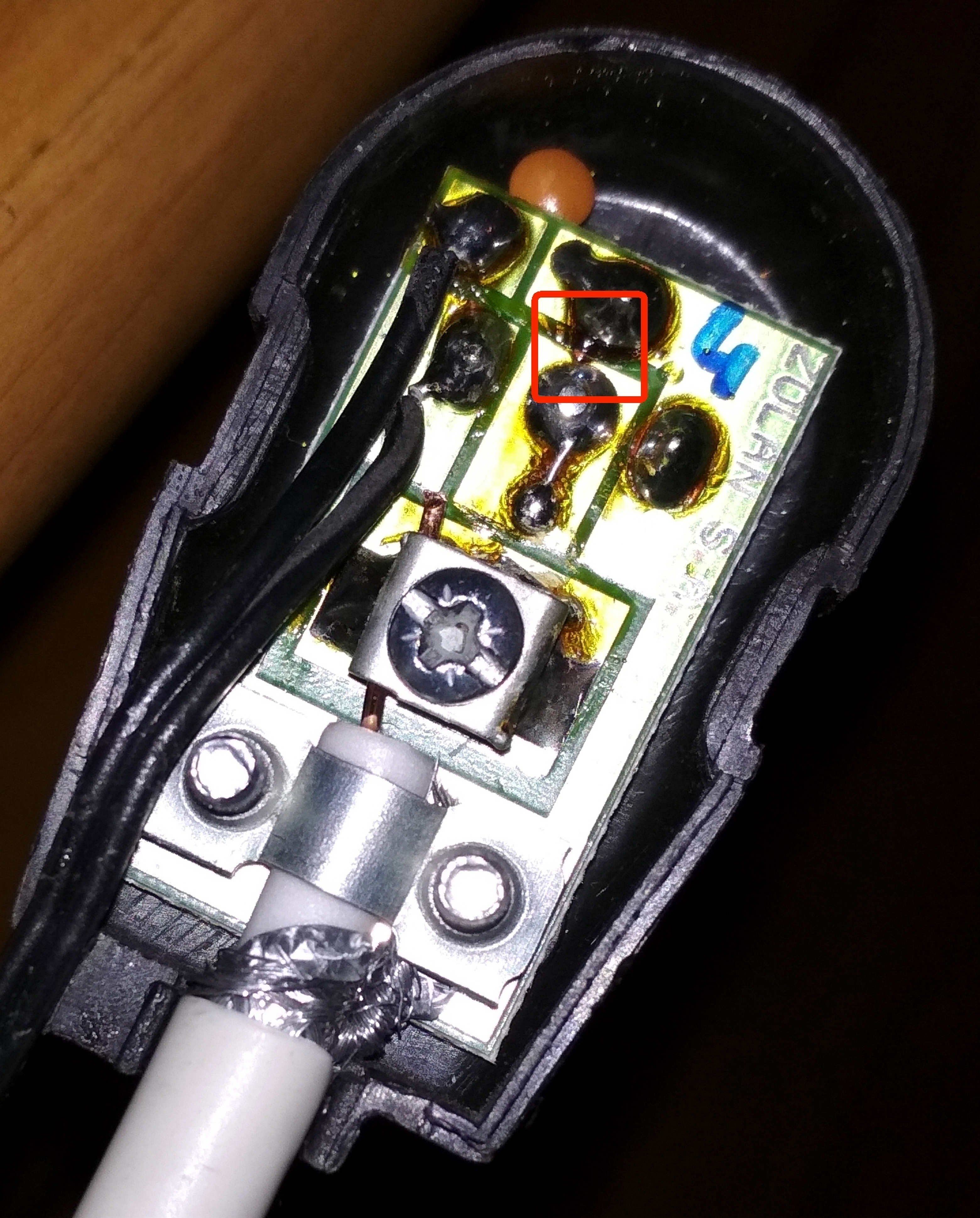
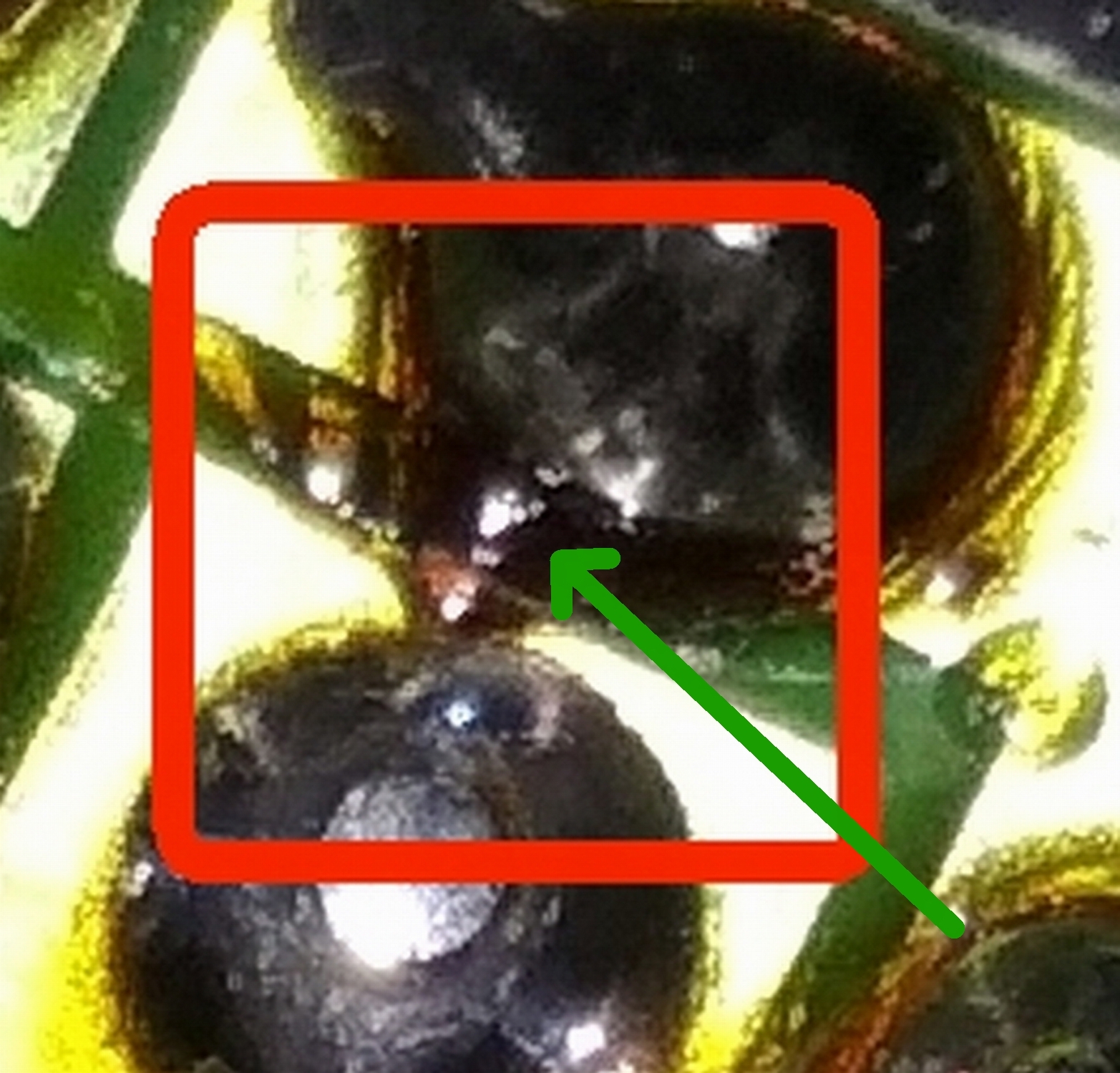
    You are right, I do not know enough, but exactly I meant this place (green arrow) do these two soldering places do not come together sometimes (from the photo it looks like this, or maybe it has to be? :cry: )

    Antenna power supply goes out - no signal. In a few hours it lights up again.
  • #9 16927338
    mocny2_3
    Level 7  
    The power supply is still warm, however, the LED is off
  • ADVERTISEMENT
  • #10 16927354
    Krzysztof Kamienski
    Level 43  
    @ mocny2_3 Is it working? Is the amplifier working? Is the signal correct for the TV?
  • #11 16927358
    mocny2_3
    Level 7  
    Krzysztof Kamienski wrote:
    @ mocny2_3 Is it working? Is the amplifier working? Is the signal correct for the TV?


    Signal from 0 to 20%, signal quality of course 0. That is not In a few hours he will probably visit him, the diode will light and everything will start working. I do not know what's going on.
  • Helpful post
    #12 16927383
    Krzysztof Kamienski
    Level 43  
    Disconnect the power supply for some time from the DC separator (i.e. power connection with the antenna cable). What will happen then? You will get information whether the problem lies in the power supply itself or in the antenna installation. Do you have a multimeter? And one more thing - there is a capacitor in the WCZ / DC separator itself, and a short-circuit choke at the TV's input. The capacitors in the separators are of low quality. They can play such "pranks". So also disconnect the antenna cable, but from the TV and watch.
  • Helpful post
    #13 16927385
    DiZMar
    Level 43  
    If the power supply is warm, then you get a short circuit somewhere else. It is possible that the previously shown point or when connecting the cable to the amplifier. Maybe a cable connected with a window connector? They can sometimes close. When the power supply is off, disconnect the antenna cable from the plug in the photo. If it still does not light, there is a fault in the plug (indicated square?) Or it interrupts one of the black wires from the power supply to the antenna plug. If the fault lights up, the antenna cable-antenna amplifier section.

    Added after 55 [seconds]:

    UPssss ..
    I'm a little late.
  • Helpful post
    #14 16927412
    arturdip
    Level 31  
    If it's an old cable, it can crack and short-circuit. As someone wrote before, disconnect the antenna and you will at least know if it is not a damaged cable. Item Arthur
  • #15 16927424
    mocny2_3
    Level 7  
    Thanks gentlemen, I disconnected the antenna from the plug and the diode still does not light. I guess the power supply is the culprit.
  • #16 16927436
    Krzysztof Kamienski
    Level 43  
    And the rest from the TV? I wrote you how it works.
  • #17 16927440
    DiZMar
    Level 43  
    mocny2_3 wrote:
    Thanks gentlemen, I disconnected the antenna from the plug and the diode still does not light. However, the power supply is the culprit

    The exchange costs 5-10 PLN but it is New Year's Eve ... although repair as I wrote earlier should not be a problem.
  • #18 16927447
    mocny2_3
    Level 7  
    But how about the rest? I pulled the cable out of the power supply plug and that's it. The power supply is now separate and still the LED is off.
  • #19 16927448
    DiZMar
    Level 43  
    Krzysztof Kamienski wrote:
    And the rest from the TV? I wrote you how it works.

    After all, he disconnected the antenna cable is what it's all about the rest of the TV ? I think it has the TV plug out ...
  • #20 16927472
    Krzysztof Kamienski
    Level 43  
    mocny2_3 wrote:
    The power supply is now separate and still the LED is off.
    Now you know - the power supply is damaged.

Topic summary

✨ The discussion revolves around a malfunctioning mesh antenna power supply that intermittently loses power, causing a loss of signal. Users suggest potential causes, including short circuits due to cable braids, cold solder joints in the power supply, or issues with the antenna amplifier. Recommendations include disconnecting the antenna to isolate the problem, checking for damaged cables, and inspecting the power supply for faults. Ultimately, the consensus points towards a likely failure in the power supply unit itself, as the LED indicator remains off even when the antenna is disconnected.
Generated by the language model.

FAQ

TL;DR: Intermittent “no signal” on mesh antennas usually traces to a failing plug‑in supply or a momentary coax short. Replacement costs 5–10 PLN, and “repair … should not be a problem.” [Elektroda, DiZMar, post #16927440]

Why it matters: This FAQ shows how to isolate if the fault is in the power supply, connector, cable, or antenna amplifier—fast.

Quick Facts

Why does my antenna power LED go out and return hours later?

Intermittent shorts at the plug or amplifier connection can trip the supply and extinguish the LED. A failing plug‑in PSU is also possible. Stray braid strands that touch the center conductor are a common root cause. Inspect and re‑terminate suspect connectors. [Elektroda, DiZMar, post #16926859]

How do I tell if the fault is the power supply or the antenna/cable?

Do a separation test. Disconnect the PSU from the DC separator (and, if needed, from the TV side) and observe the LED. “You will get information whether the problem lies in the power supply itself or in the antenna installation.” [Elektroda, Krzysztof Kamienski, post #16927383]

My power supply is warm but the LED is off—what does that indicate?

Warm housing with the LED off indicates the PSU is under load from a short elsewhere, often at the plug, cable, or amplifier connection. Remove sections one by one to find where the short clears. [Elektroda, DiZMar, post #16927385]

The LED stays off even with the antenna unplugged. What next?

If the LED remains off when the PSU is completely separated from the antenna path, the PSU is faulty and should be replaced. This confirms the issue lies in the power unit itself. [Elektroda, Krzysztof Kamienski, post #16927472]

What does 0–20% signal strength and 0% quality typically mean?

That pattern points to an unpowered or failed masthead amplifier path. With no DC to the amplifier, tuners often show low strength and zero quality. Restore DC power first, then recheck metrics. [Elektroda, mocny2_3, post #16927358]

Could a single tiny braid “hair” really kill the signal?

Yes. A single strand bridging the shield and center conductor intermittently shorts DC and RF. Trim flush, ensure no whiskers remain, and remake the connector if necessary. [Elektroda, DiZMar, post #16926859]

Do photos of my plug help diagnose this intermittent fault?

Not reliably. Connectors can look perfect yet hide intermittent shorts. Also check for “cold” solder joints inside the PSU; they fail under heat or vibration. Hands‑on inspection is required. [Elektroda, DiZMar, post #16926879]

What is a DC separator in TV antenna setups?

A DC separator injects power onto the coax for the amplifier while blocking DC from entering the TV. It typically includes a coupling capacitor and an RF choke at the TV input. Failures here can mimic PSU faults. [Elektroda, Krzysztof Kamienski, post #16927383]

How much should I expect to pay for a replacement antenna power supply?

Approx. 5–10 PLN for common plug‑in units. Swapping is often faster than chasing intermittent faults, then you can bench‑test the old unit later. [Elektroda, DiZMar, post #16927440]

Can old or cracked coaxial cable cause this on‑off behavior?

Yes. Aging coax can crack, letting the shield contact the center conductor when flexed or heated, causing intermittent shorts and PSU shutdown. Replace suspect runs. [Elektroda, arturdip, post #16927412]

How do I run a fast 3‑step isolation test?

  1. Unplug the PSU from the DC separator and watch the LED.
  2. If unclear, also disconnect the antenna cable from the TV side and retest.
  3. Reconnect sections one at a time to locate the failing segment. [Elektroda, Krzysztof Kamienski, post #16927383]

The LED sometimes lights after hours—should I still replace parts?

Yes. Intermittent recovery suggests an internal PSU fault or thermal short. If the LED stays off when isolated, replace the PSU first, then re‑evaluate reception. [Elektroda, Krzysztof Kamienski, post #16927472]

What component inside the separator commonly fails?

The coupling capacitor in the WCZ/DC separator is a weak link and can misbehave, causing symptoms like dropouts or false shorts. Replace the separator to test. [Elektroda, Krzysztof Kamienski, post #16927383]

Any edge cases I should check at the plug PCB?

Inspect close solder pads or bridges that may touch when warm. Even slight pad contact can short intermittently and extinguish the LED until it cools. Rework spacing if needed. [Elektroda, wojtek1234321, post #16927108]
Generated by the language model.
ADVERTISEMENT